The “Closer to Jesus” Blog

The Prodigal Father 

Written and Illustrated by Corrin Charlson
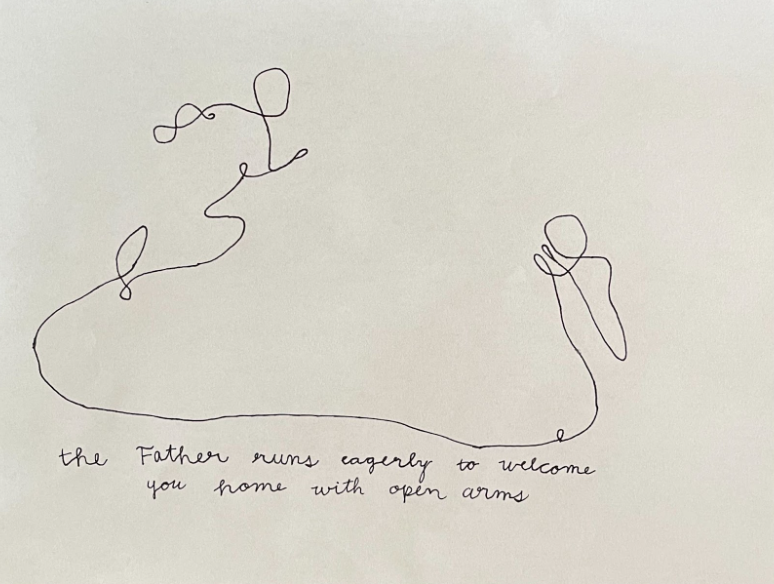
“The Father runs eagerly to welcome you home with open arms.”

The “Prodigal Son” is one of my favorite Bible stories because it reminds me of my Father’s love for me and for all of His children. (If you are not familiar with it, read Luke 15:11-32) This story is often referred to as the “Prodigal Son”, but I like the title of the “Prodigal Father” better. Here’s why: 

One definition of prodigal is “recklessly extravagant.” We may think this best describes the son’s actions in his wild spending of his father’s money, but looking closer, the father is much more reckless in his actions. 

After reading about the son’s foolish actions with his father’s inheritance money, the story tells of the father running to welcome his wayward son back home. It does not make sense. Why would he run to welcome back his rebellious son?

Look what the son committed against his father. The son cared only about money and what the world could give him, completely ignoring his relationship with his dad. So, he asks for his inheritance early, insinuating he wished his father was dead so he could have his portion already. When the father graciously gives him his inheritance, the son goes and spends his father’s hard-earned money on wild, sensual living. What hurt the father must have endured from this son and his actions! If this story ended with the father turning his back on the son, we would not be surprised. The son would have deserved what he got after losing everything his father gave to him. The father could have closed the shades, locked the door, and pretended he was not home. 

But, the father does not do this.The father runs out to his son with eagerness, excitement, and enthusiasm. No hesitation or overthinking. Just as he does not seem to notice the state of his son’s physical self: filthy, smelly from living with pigs, the father does not care about the son’s dirty, shame-filled soul. He throws his arms around his long lost son.

And it gets better.

The father then calls for a party with the best food, drink, and people to celebrate this son. What reckless love! It is this reckless, extravagant love that causes us to call him a prodigal father. This story is a beautiful picture representing our Father in heaven who rushes to welcome us home despite our sin and shame. We are the wayward son and praise God that He is the loving Father in this story!

This picture I drew is a drawing of one fluid line that creates the son and the Father. The beginning of the single line starts at the Father’s hand. This line continues to shape the Father and then it travels down to form the son. This line represents the Father’s connection and commitment to us, His creation. Just as His hands formed us with a uniqueness we each have, those same hands never fail to reach out to us when we wander from Him. God longs to hold us and keep us close. However, in our rebelliousness, we wander off from His safety. We pursue what we think will fulfill us but only leaves us dirty and far from Home. Although that line between the Father and the son may stretch far because of our waywardness, it does not snap or break. The Father does not lose patience with us and cut us off, instead He eagerly waits for us. It is Him that draws us in; He shortens the line between us and Himself. Despite our dirtiness, our sin, our shame, our guilt, He welcomes us with reckless, beautiful, committed love that we have never known elsewhere. Wherever we go or wherever we have been, the Father opens His arms and invites us into His safe and loving arms just as the prodigal father did for his beloved son. 
The Security of the Vine: Abiding, Not Striving  

The Security of the Vine: Abiding, Not Striving 

Written By Emily Gorski

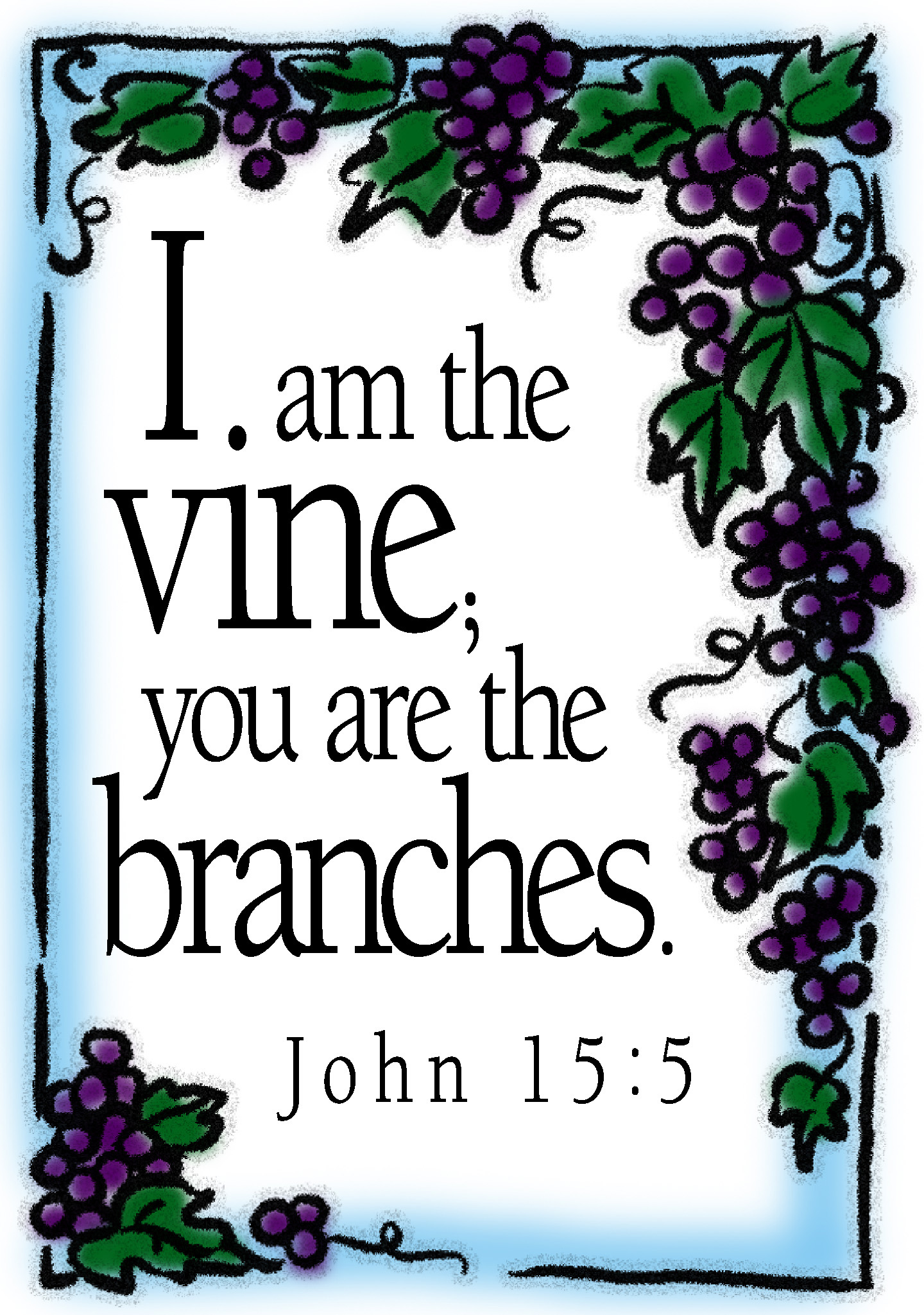
“I am the vine; you are the branches. If you remain in me and I in you, you will bear much fruit; apart from me you can do nothing.” -John 15:3-4

 Life-giving communion with the Vine. 

This verse and the whole section on the Vine and the Branches from John 15 is a pretty well-known part of the Bible, but for some reason, it was only recently that I realized these words were from the account of Maundy Thursday. 

Maundy Thursday is the night that preceded the most important weekend of Jesus’ life. The culmination of his earthly ministry, the end to the war of sin, death, and the Devil. The disciples, however, do not yet quite have the full understanding of what Jesus has told them would happen. While the scenes of Maundy Thursday unfold, the insecurity of the human flesh is revealed as the disciples’ hearts and minds are overcome with fear and uncertainty that all was not well.

 In the Upper Room, after Jesus announces that one of them would betray him, the conversation among the disciples quickly dissolves into an argument about which of them is considered the greatest. (Luke 22:24) The human insecurity of needing to prove that I measure up.

 When Jesus offers his humble service of washing his disciples’ feet, Peter indignantly replies, “You shall never wash my feet!” (John 13:8) The human insecurity of feeling too unworthy to receive God’s love. 

When Judas and the entourage of soldiers and officials arrive to arrest Jesus, Peter impulsively draws his sword and cuts off the ear of one of the high priest’s servants. (John 18:10) The human tendency of thinking that I need to help God. 

As Jesus is brought before the Sanhedrin, the disciples scatter, deserting Jesus. The human tendency to run from Jesus, instead of to Jesus, when things don’t go the way I thought they would.

 When asked if he was a friend of Jesus three different times, Peter urgently denies knowing Jesus at all. (Luke 18:27) The human insecurity of feeling exposed to the opinions and actions of others. 

The disciples’ reactions of alarm to these events reveal the natural posture of the human heart and mind, which respond to external circumstances through the limited lens of what I see, what I understand, and what I think should be happening. The disciples did not expect the coming of God’s kingdom to look like defeat or failure. So when it did, any trace of trust and peace slipped through their fingers and they began to operate out of the emotional impulses of anxiety and insecurity.

Jesus’ actions on Maundy Thursday reflect a different heart. He washes the feet of a friend who he knew would hand him over to be killed. He willingly rises to meet his betrayer. He heals the servant’s ear that Peter cut off. He allows himself to be arrested, mocked, and misunderstood without a fight. The Father’s mission. The Father’s heart. This is security even in the face of pain, sorrow, and death. 

Because security is found through abiding.

Abiding in the One who provides a firm foundation and a perfect plan to rely on and rest in. Jesus’ perfect and constant surrender to the Father’s will fueled his life led with love and pursuit for the Kingdom, all the way to the cross. 

Praise God for the events of this weekend. Where our communion is restored with the Father through Jesus’ body and blood. Where we get to experience intimate connection as a branch on His Vine that continuously sustains new life in us, that provides security, strength, and renewal. Where there is no striving in fear, only abiding in love. Where the Father’s will fuels our lives with love and pursuit for His Kingdom.

 Life-giving communion with the Vine. 

Prayer: 

God, we thank you for the Vine, 

where you gently hold our hearts and minds. 

Through your son we are secure,

 as we abide in your love that casts out fear.

 At times it may seem that all is not well,

 but in the safety of your presence I still dwell.

 Help me see I am free to love and let the Spirit grow fruit, 

as you lead me in the grace of your Kingdom pursuit. Amen.

The Vibrant Color of God's Word 

The Vibrant Color of God's Word
Written by Jill Dunbar

This past summer it seemed that everyone was able to catch a glimpse of the northern lights except for me. I would run outside multiple times and stare up at the night sky in hopes that I might see this wonder everyone was talking about. I set alarms, battled bugs and tried not to be afraid of whatever wildlife was roaming around nearby. It would always go the same; stars shinning beautifully, crickets chirping in the background and the cool breeze rustling through the leaves. Beautiful, and yet, I was still missing something.

Ever have that same feeling when reading scripture? Some passages reach out and grab your heart just like a beautiful sunrise or sunset where all the rich colors and meanings are visibly present. But what about times where you see the beauty but still feel you are missing something?

This happened to me recently in a Bible study where we were looking at Genesis 40. This chapter talks about Joseph, who was currently serving a prison term for being wrongfully accused of an attempted assault of Potiphar’s Wife. Joseph was soon joined by a cupbearer and a baker. These two individuals ended up having bizarre dreams and ended up sharing them with Joseph who then provided interpretations. One ended up in great success and one ended up being executed. Ultimately the dreams came to pass just as Joseph had interpreted them. 

When the time came for me to share what my observations or applications of this section, I was stumped. It seemed like a nice story of God using His people to do some pretty amazing and important things, but beyond that, I couldn’t think of anything insightful to add or find a way to articulate what I already noted.

But then something started to happen. As the rest of the group started sharing how God had spoken to them through His Word, the scripture came alive, and I started looking at this chapter a little differently. The things they helped me see included:

  • How many times do we despise our circumstance and then miss seeing the hand of God in our lives? 
  • Accepting where God has put us knowing He is near.
  • How is God molding, shaping and refining us in our current situations? 
  • While it may seem we may have been forgotten, there may be a great purpose to help us remember that God still sees us and will use us to share stories of his faithfulness. 

You see, sitting in God’s word daily is essential for our spiritual walk and fueling our personal relationship with our Savior. Those quite moments alone allow us to soak in all that God has for us and for Him to speak to us through His Word. But in order to add color and provide another lens, it is also important to embrace community and study God’ s word with others. The Bible talks about community as a way to build each other up, work together, compliment one another’s strengths, correcting each other, sharing in each other’s sorrows, encouraging and spurring one another in their faith, just to name a few. God created us for community. We need that real and sometimes vulnerable connection with others to see what we are missing, provide different perspectives and encourage us in our spiritual journeys.

So that night sky I was talking about? Turns out someone had to tell me to view through my camera on my phone. The light sensitivity of the camera helps pick up the light our eyes cannot see on their own. Once I switched on that camera, the night sky came to life. Greens, purples and reds began to dance through the sky as the moon and stars hung in suspense in the beauty around them. Totally awestruck, I could not get enough of what God was placing before me.

Likewise, I am continually amazed as the insights and beauty my Christian friends and small groups bring to my life. I am thankful that our time together ignites a curiosity to continue to grow even closer to my Savior. Thank you all for helping me see the vibrant colors of God’s Word!

He's Not Done With You Yet 


He's Not Done With You Yet
Written by Katie Klement
Artwork by Abby Westendorf

When I was 9 or 10 years old, I learned this story, and it has stuck with me ever since: 

"There was a potter who had a lump of clay. He pressed and shaped this clay all day, and the clay cried “That hurts!” To this the potter responds “Not yet.” After that the potter put the clay on a wheel and spun it around and around and the clay cried “That hurts, I’m dizzy!” But the potter responded, “Not yet.” Then once the spinning stopped, the potter put the clay into an oven, it was very hot. The clay cried “It’s hot!” The potter looked into the oven and said “Not yet.” Finally the potter took the clay out of the oven, just to turn around and put it back in a hotter oven! “Ow! It hurts!” cried the clay. The potter responded “Not yet.” Finally the potter took the clay out of the oven and held up a mirror for the clay to see. The teacup cried “Look, I’m beautiful!” The potter then says to the teacup “I had to make you go through all of that, so that you would become this. If I wouldn’t have molded and formed you you would still be a lump of clay, if I wouldn’t have thrown you in the fires you wouldn’t have been frail and broken too easily.” 

The original story is longer, you can google it later (author unknown). This story has meant a lot to my mom, my sister, and I over the years. It showed me that when I was going through all the valleys, God was still with me. 

When I was 9, I moved from Wisconsin to Florida. It was the first time my life was uprooted from everything familiar, and taken in a direction where everything was unknown, where I did not have any control. But, with the teacup story in mind, I knew that God was using those valleys to shape me into who I would become. He just wasn’t done yet. 

In Genesis 40, Joseph is in Pharaoh's prison. Verse 4 says that he stayed there for “some time.” I never realized how long Joseph was in prison until recently. He didn’t know if he would be there for a few weeks, months, years, or if he might die there. He waited. God was forming and shaping him for a unique purpose. 

We can see part of that purpose take place later in the next chapter when he is remembered (finally) by the cupbearer and taken to Pharaoh to interpret his dream. Which leads to him being put into place as Pharaoh's second in command to help save Egypt. Wow, what a purpose! 

But I wonder, what would have happened if Joseph didn’t spend over 2 years in that prison? How much did that experience shape and refine him into the man he needed to become to rule a kingdom, and make difficult decisions that affected thousands of lives? 

God is refining. He is shaping. He is not done with you yet. I have to keep reminding myself of this when I am in one of those valleys. Whether it was during college finals week, moving across the country (more than once), going through breakups, or sitting on my bedroom floor in a mess of kleenex. God was (and still is) right there with me, just like he was right there, looking into the oven at that little teacup. 

Some refinements are small moments in time. Like when you’ve just had an oddly rough day at work out of the blue, or when dinner completely flops (for my husband and I that means it’s pizza night). 

But other times, it is a whole season of life, just like Joseph, we don’t know if it is going to be a few weeks, months, or even years. God is still there, he has a plan. He is molding and shaping you, he’s just not done with you yet.

Here I Am, But Near You Are 

Here I Am, Yet Near You Are 
Written by Emily Gorski


In Genesis 40, we find Joseph still living in prison for an unjust reason. He is joined by two of Pharaoh’s officials, the Cupbearer and the Baker, and he interprets their dreams with God’s power. Knowing that the Cupbearer would soon be released from prison, Joseph asks him to remember him and mention his name to Pharaoh so that he too can leave. After three days, the Cupbearer is restored in the sight of Pharaoh as Joseph said, but he forgets about Joseph and makes no mention of him. 

Can you imagine what Joseph was thinking in this moment? Here I am, God! In prison for something I haven’t done, not knowing how long I’ll be here, and forgotten by someone who could have helped me get the heck out of here. What do we do when we feel stuck or forgotten somewhere, and we can’t see the bigger picture of our situation? Because let’s be honest, it can be SO hard. Well, first we eat some of our favorite ice cream ;) but then, it’s important to acknowledge where we are, at the feet of Jesus. He doesn’t ask us to pretend like we love the spot we’re in, or like we don’t need any help. Instead, he invites us to bring him our real emotions, fears, and doubts in honest prayer and reflection. He also invites us to acknowledge the power and faithfulness of our big God. 

In Joseph’s story, we can see from beginning to end the fingerprints of God’s love and how he was working for good. We see God allowing Joseph to be in charge of the other prisoners and giving him opportunities to serve, interact with, and notice the people in there with him…we see God granting Joseph power to interpret dreams…in the end, we see God releasing Joseph and making him 2nd in command of all of Egypt. We might not be able to understand our own situations yet, but this story of God’s faithfulness is an encouragement to acknowledge God’s presence in the waiting. God is building in each of us a heart of holy expectation that he will weave together a story far greater than we could imagine. Below are some words I wrote that could be used as a prayer. Tell Jesus where you are. He already knows, but tell him anyway. And let him remind you that he’s right there next to you. 

Here I am 
This prison feels unjust 
Wondering and waiting 
Is it possible to trust? 
Here I am 
I see no clear way out 
Listening and praying 
God, take my fear and doubt. 
Here I am,
My hopes let down by man 
Pondering and asking 
Am I really in your plan? 

Yet near You are 
Your love holds fast to me 
Paving and preparing 
The roads I can’t yet see. 
Yet near You are 
You work daily on my heart 
Pruning and refining 
You’re painting a work of art. 
Yet near You are
You whisper in my ear: 
Child, there is purpose 
In this time and place right here. 

The Pain and Purpose of Being Forgotten 

The Pain and Purpose of Being Forgotten

“The chief cupbearer, however, did not remember Joseph; he forgot him.” - Genesis 40: 23
written by Mike Westendorf
artwork by Faith Belt

You’ve worked hard, you’ve helped others, your work has made a positive difference in the lives of people around you.  You try to do it selflessly, but deep down you’re hoping someone notices, someone sees your effort and will acknowledge it.  At times you need a favor too, just like all the times you’ve been serving other people who needed a favor from you.  And then… that favor doesn’t come.  The person forgets you and what you’ve done for them.

If you’ve ever felt the pain of being forgotten when you have helped someone, you know something of the internal struggle between helping people and keeping score. Wanting to do good for others and yet hoping for a little something in return.  In the world of the “Enneagram” personality typing system, I am a  type 2.  I am the “helper” personality and I do love being there for people and helping build community, solve problems and move people and organizations forward.  When I’m in a healthy space, I can focus on others and I don’t have an immediate need to be rewarded.  A pat on the back or a kind word of thanks will do.

But when I’m unhealthy, when I’m stressed or feeling afraid, I realize that I have been keeping score. If my work is forgotten, I can become much more direct, shorter tempered, less inclined to help and quicker to keep score.  It turns out, the helper isn’t as selfless as I thought it was and it turns out God has some work to keep doing in me.  Praise God for his forgiveness!

The story of Joseph is one that is near and dear to me and it may be to you as well.  A guy who has been the victim for much of the story. Doing his best with his talents and then hated or being taken advantage of.  If it only it were that simple.  Joseph came off as an arrogant kid to his family.  Favored by his father to the jealousy of his brothers.  Blessed by God, he had the talent, looks and organization to have an easy and influential life.  But God was going to prepare him to be one of the first Biblical examples of the “Messiah story”.  He is an earthly foreshadowing of the ultimate story that will find perfection in the person of Jesus. Joesph will be used by God to “save the world”.

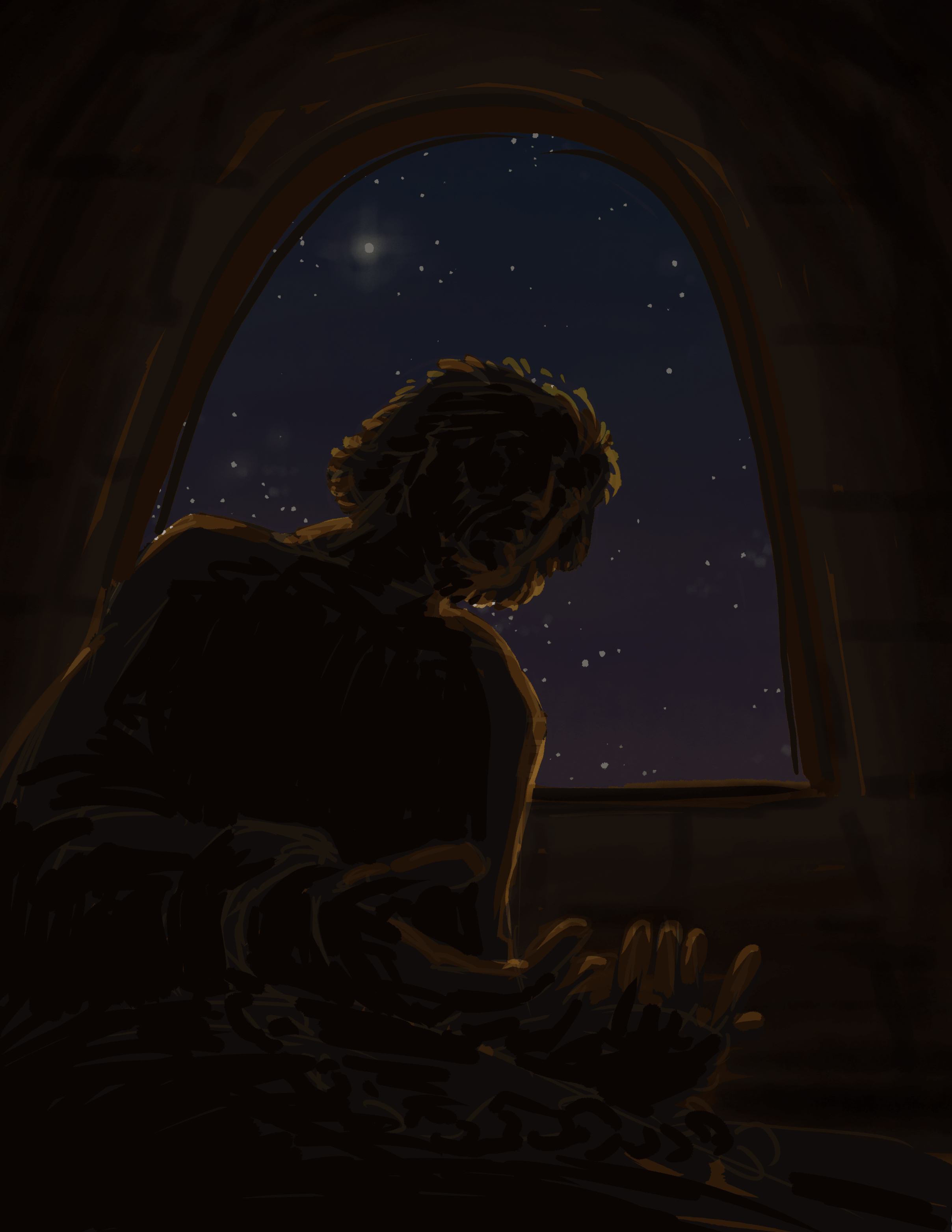
That little line in Genesis 40:23, “He forgot him”, is a painful one.  Joseph had done good work even after being falsely accused and thrown in prison. He earned the trust of the guard and earned an excellent reputation for being trustworthy and effective in his charges.  Plus he could interpret dreams.  But Joseph was desperate to get out of prison.  He saw a way to get out and put his trust in a fellow human being.  And God said… no.  The cupbearer forgot him.  While he went back to work in Pharoh’s court, Joseph continued to care for prisoners in the “dungeon” where he would wait until “the time had fully come” (Galatians 4), roughly 2 years later.  At just the right time, Pharoh would have a dream.  The cupbearer would remember Joseph.  Joseph would interpret the dream.  Pharoh would put Joseph in charge of Egypt to account for the impacts of the dreams as second command of all Egypt!

To be forgotten is painful. To help people with the expectation of reward is a common reality for all of us. To be forgotten after we helped someone we hoped would reward us or remember us, can sometimes get in the way of what God is doing in our hearts.  While there is pain in what appears to be a moment of being forgotten, God didn’t miss the moment.  He used it. In many cases what feels like being forgotten to us, is something God will use to prepare us for work in the future. Work that has GOD’S kingdom at the center instead of “MY kingdom”. 

As God worked through that moment of being forgotten, he prepared Joseph’s heart and mind.  God gave him the ability to see that the trials he endured would lead to the fulfillment of those “arrogant” dreams he had as a child. Teenage Joseph might have seen that as a place for him to lord it over his family.  God used Joseph’s life circumstances to prepare him to meet his family’s need and establish a lasting legacy in the story of God’s people.

The pain and purpose of being forgotten can often lead us to a place of humility where God can work through our lives for the purposes of God’s kingdom instead of ours.  That God might bring you and I to a place where we can say with Joseph “You intended to harm me, but God intended it for good to accomplish what is now being done, the saving of many lives.”

Prayer: In the moments I am forgotten, Jesus, please help me remember that you still see me and can still use me and my circumstances to bring your grace and the stories of your faithfulness to people around me both now and in the years to come!  God grant it for Jesus sake!

Artists Note on the image from Faith Belt: "The image depicts Joseph, the interpreter of dreams, as he sits imprisoned in the captain of the guard's house. He looks downard, focusing on his chains, surrounded by darkness. Behind him an open window reveals a vast, star-filled sky - a reference to the promise God gives to Abraham (and his descendants) that all people will be blessed through him. We see this in Joseph's lifetime as he rescues all of Egypt from starvation. Joseph will also forgive his brothers who sold him into slavery - an amazing picture of Christ and the full reconciliation he grants us. God knows the bigger picture, remembers his promises for his people, and will bring about good far greater than we can imagine! Perceive it!